Phase III of the Mekong Region Land Governance project closed in December 2025. This page will remain active for a limited time, but all publication materials and toolkits have been transferred to a permanent home on the Land Portal site here.

စာစောင်များ

အသိပေးဆုံးဖြတ်ချက်ချရန်အတွက် MRLG ၏အရင်းအမြစ်များနှင့် သုတေသနများကို ဝင်ရောက်ကြည့်ရှုပြီး အပြုသဘောဆောင်သောပြောင်းလဲမှုနှင့် သိသာထင်ရှားသောအကျိုးသက်ရောက်မှုများကို တွန်းအားပေးရန် အသိပညာများစွာကို ရှာဖွေတွေ့ရှိပါ။

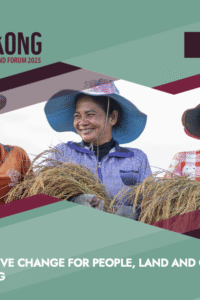
Mekong Regional Land Forum 2025: Transformative change for people, land and climate in the Mekong. Summary Report.

The Summary Report of the 4th Mekong Regional Land Forum provides key messages, insights and references related to three pressing interlinked challenges: making land tenure central to climate action; ensuring just agrarian transitions; and strengthening policy reforms in land and forest governance. These issues were discussed during the event in Bangkok in September 2025 by representatives from governments, civil society, the private sector and communities from across the Mekong region and beyon…
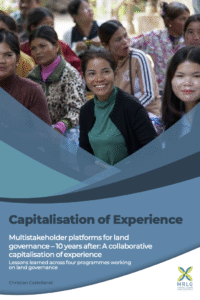
Multistakeholder platforms for land governance – 10 years after: A collaborative capitalisation of experience. Lessons learned across four programmes working on land governance.

This study presents a comparative analysis of five experiences of working with multistakeholder platforms based in Burkina Faso, Cambodia, Guinea, Lao PDR and Malawi.

Social integrity and forest carbon markets in the Mekong region: A legal review of national frameworks in Cambodia, Lao PDR, and Viet Nam

This thematic study reviews the evolving national legal and policy frameworks surrounding forest carbon in Cambodia, Laos, and Viet Nam, centering on the concept of social integrity, and ensuring that the rights of all stakeholders, particularly Indigenous Peoples and local communities (IP&LCs), are clear and upheld.

Training of trainers manual on customary tenure documentation

The Training of Trainers (ToT) Manual on Customary Tenure Documentation provides structured guidance for preparing and implementing a training on customary tenure documentation.

Understanding policy engagement and the impact of a multistakeholder platform in Burkina-Faso. Case study.

This study identifies the lessons learned from the PMAF involvement in the reform of the real estate promotion law. This case study contributes to a larger Capitalisation of Experience that draws lessons learned from improving land governance through multistakeholder platforms for policy dialogue.

Contribution of the multistakeholder platform on land governance to the formulation of national agricultural land tenure policies in Guinea.

This study identifies the lessons learned from the PFMA involvement in the land reform processes. This case study contributes to a larger Capitalisation of Experience that draws lessons learned from improving land governance through multistakeholder platforms for policy dialogue.

Contribution de la plateforme multi-acteurs sur le foncier aux processus d’élaboration des politiques foncières agricole et nationale en Guinée. Étude de cas.

This study is the French version of Contribution of the multistakeholder platform on land governance to the formulation of national agricultural land tenure policies in Guinea. Case study, Capex series #8.

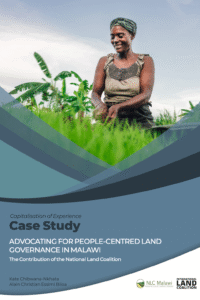
Advocating for people-centred land governance in Malawi. The contribution of the National Land Coalition

Since 2014, the Malawi multistakeholder platform on land governance has provided a space for dialogue among stakeholders across government, civil society, academia, private sector, development partners and rights holders. This case study draws the lessons learned from the platform experience in supporting the development of inclusive policies and local-level policy implementation.

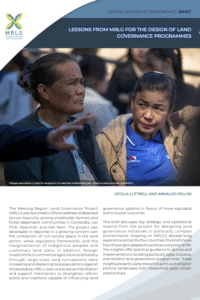
Lessons from MRLG for the design of land governance programmes (CapEx Brief 02)

The Mekong Region Land Governance Project (MRLG), active from 2014 to 2025, pursued land tenure security in Cambodia, Lao PDR, Myanmar, and Viet Nam through a politically informed, adaptive strategy. Key findings highlight that MRLG’s effectiveness stemmed from building thematic alliances on customary tenure and responsible agricultural investment, which enabled coordinated advocacy and policy influence. Constructive government engagement—framed around national development goals—allowed access t…

Scroll to Top